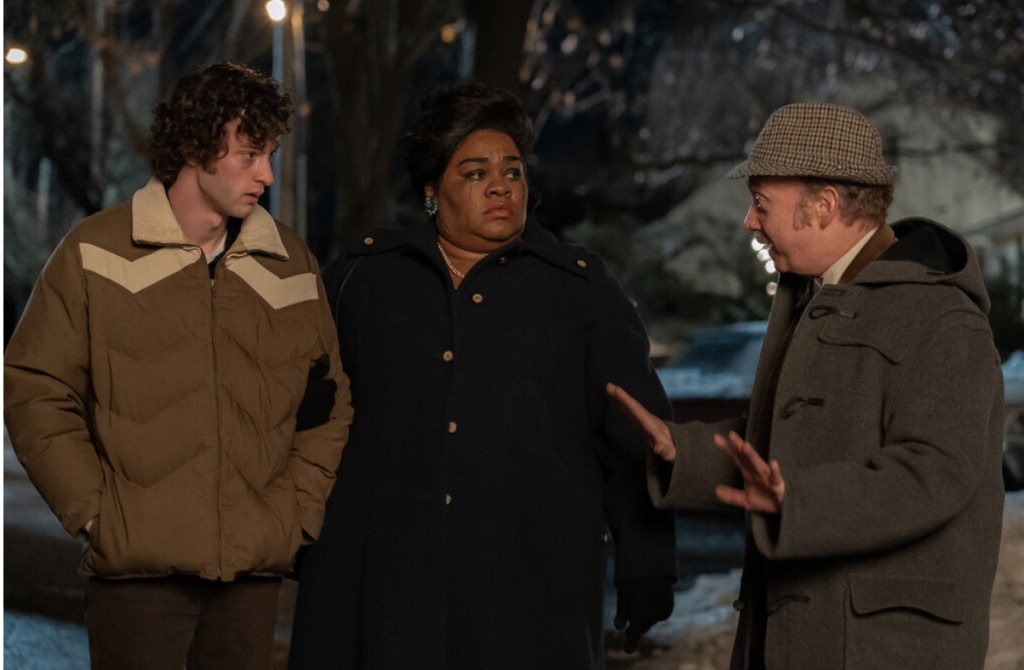
The Holdovers, starring Paul Giamatti, Da’Vine Joy Randolph and Dominic Sessa is, dare I say, a beacon of hope for an era of cinema that’s drowning in ponderously long sagas that require two double lattes and one trick pony action movies that serve no one except the popcorn vendor.
Imagine Alexander Payne, the director who gave us Sideways and The Descendants making his pitch to a Hollywood studio chief – “It’s Sideways meets Scent of A Woman.’ Wildly excited over the prospect of tangos through wine country, the studio chief gives Payne the green light. Lucky for us, there’s none of that in The Holdovers. Instead what we are treated to is a beautifully rich and complex tale of three people, each on a different journey who find hope and common purpose amid the lonely confines of a stuffy New England prep school during Christmas break in 1970.
Mr. Payne’s Sideways, the pinot noir filled journey through Northern California wine country that was at times both madcap and soul searching has become, in its own right, a bit of a classic. In many ways, you could say that The Holdovers represents an encore piece for Mr. Payne, as he advances that winning formula. From character motivation to narrative to setting and era, this is a different film. But, with that said, you can’t mistake its soul which has pure “Sideways DNA” running straight through it.
And, that’s a good thing because Payne is a master of understated storytelling. He possesses a knack for illustrating the nuanced sad soul, inserting subtle comedy and well placed life affirming themes along the way. Paul Giamatti, who once again plays an irascible teacher with a curious past demonstrates that he can channel that vision and direction into an award winning performance. But he’s not alone because this is an ensemble piece which requires a grieving mother, portrayed beautifully by veteran Da’Vine Joy Randolph and Dominic Sessa, a newcomer, who does a yeoman’s job of playing the over privileged trouble maker on his way to being kicked out of school.
Like Sideways and The Descendants, The Holdovers is a redemptive journey of personal sacrifice which unfolds and evolves as the backstory of each character is revealed. It’s a bit of a juggling act for Payne who has his work cut out for him. He needs to balance the revelation of each past challenge and struggle that’s shaped the lives of Paul, Angus and Mary respectively into a cohesive narrative that makes sense and goes down easy. But Mr. Payne pulls it off in a convincing and satisfying fashion. And he manages to accomplish it all in a rather efficient manner which is a rarity in today’s cinema where filmmakers seem to think -“if I make it longer it will be better.”
The Holdovers is a satisfying movie you’ll want to watch again and again. Its setting makes it an appropriate choice to pair with an egg nog during Christmas but I’d imagine it will go down just as well with a beer in July.
Reserve 2 hours now for The Holdovers, you won’t regret it.
For most of us, the world of high fashion or haute couture if you’re fancy, is a spectator sport. From the pages of Vogue to the frolics of films like the Devil Wears Prada, beyond the occasional indulgence, its mostly a life we look at from afar. But for multi generational families like the Guccis, where fashion is both a livelihood and a legacy, it’s in your face personal.
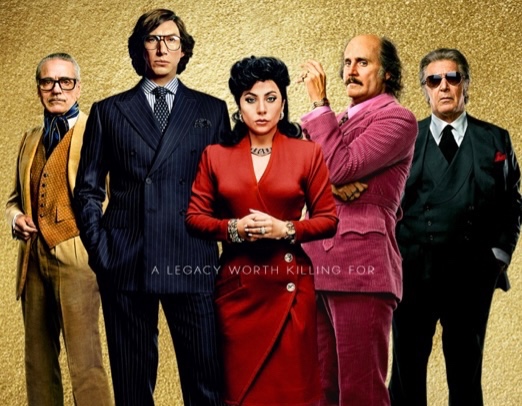
That brings us to Ridley Scott’s latest offering, House of Gucci, which recently opened on a streaming platform near you. If you’re familiar with any of the ‘feedback’ that current members of the Gucci family have bestowed upon Mr. Scott, you know they are not very happy. That’s mainly because the film depicts a world filled with deception, greed, lust and betrayal. Not a particularly flattering representation of a family who’s name adorns some of the most exclusive items in ladies and mens fashion. And maybe they have a point because while the real life killing of Maurizio Gucci (at the behest of his former wife Patrizia Reggiani) is true, at least some of the Gucci family’s dramatically bad on screen behavior, is most likely over embellished for the sake of entertainment. Sadly, to that end, it’s this over embellishment and the choices of some of the actors and the filmmaker himself that proves to be the chink in this film’s armor.
We can start with Al Pacino who no one would dispute is one of the best actors of his generation. But there’s documented evidence that Pacino can swing and miss and his characterization of Aldo Gucci is an example. He may be the right age to play the Gucci family patriarch but a quick Google search proves that his wild hair, corpulence and over the top behavior are not consistent with the recollections of the people who knew Aldo Gucci. And even if it was, his larger than life performance just doesn’t work. It’s a shtick he’s tried before with success but this time it wears like an ill-fitted suit.
And then there’s Jared Leto as Aldo’s disappointing son Paolo. Is this the same guy from Fight Club, Requiem For A Dream and Dallas Buyers Club? With more wild hair (this time topped with a bald skull cap) and a wardrobe that appears to have been selected from the leftovers at a third hand thrift shop, there’s nothing fashionable about Leto. In fact, after awhile I started to feel sorry for him, in much the same way you feel sorry for the clown who just found out that Ringling Bros left town years ago without him. I know, I’m in the minority here because Leto’s performance is being heralded as something akin to Brando in On the Waterfront – but I just don’t get it.
But what about Gaga you say as the scorned Patrizia Reggiani. Clearly the Lady is perfectly cast, right? She certainly looks the part, the eyes, the hair, the swagger… Bellissimo! Perfecto! Well here’s the thing, it’s not a particularly memorable performance. I know, again, I’m pretty much alone on this. The fact of the matter is Lady Gaga is a remarkable vocalist. She glides through musical genres with the ease of an olympic figure skater and she will be remembered as one of the greatest singers of her time. But in my opinion, unlike some who previously made the move to the screen, the likes of which include Sinatra, Streisand, Cher and Kristofferson, she’s not particularly transcendent. I’ve always thought her acting was, I don’t know, how would you say it…meh. It’s simply not a stretch to play this role and not withstanding the striking resemblance, its my personal opinion that Ms. Germanotta should sing more and act less.
So you ask… did you like any of the performances? In fact I did, Adam Driver as Maurizio and Jeremy Irons as his father Rodolfo are pitch perfect. Irons portrays the tortured brother of Pacino’s Aldo. As a Gucci heir, he owns an equal share of the world renowned brand but chose a different path as an actor. His character’s failure to achieve success is written all over his face and along with his wardrobe, Irons delivers an impeccable performance. The same can be said of Adam Driver who, regardless of whether he’s playing a 17th century Jesuit or a bored bus driver, rarely disappoints. Driver’s Maurizio is a nuanced character study of a son who never wanted to be part of the family business but ends up at the top of the house. His metamorphosis into the cold and calculating executive who has little regard for anything else is ironically reminiscent of the performance that Pacino once delivered as Michael in The Godfather.
While the other elements of the film are fine (its hard to mess up the cinematography when you’re afforded the vistas of Tuscany, Piedmont and the Swiss Alps) I kept thinking that something was missing from House of Gucci. I mean come on, over the course of two hour thirty eight minutes of run time no one speaks a word of credible Italian. What self respecting Italians, living in Italy, would sing Happy Birthday in English? We even have to wait until the third act when the actor portraying fashion icon Tom Ford appears; to actually demonstrate that this is the business of high fashion.
And that, my friends, is the rub that ruins this film. What House of Gucci lacks is a level of authenticity that could have elevated it beyond its reductive soap opera feel. A more authentic film could have showcased the world which elevated the Gucci name to the apex of fashion. But in their zeal to tell a caper story of greed and lust, the creators of House of Gucci missed that one important task. They failed to illustrate the culture and the people that make this world of high fashion so captivating, so intoxicating that they would risk everything to remain a part of it. In fact, if the current day Gucci family stepped back from their personal grievances with Ridley Scott perhaps they would see that too.
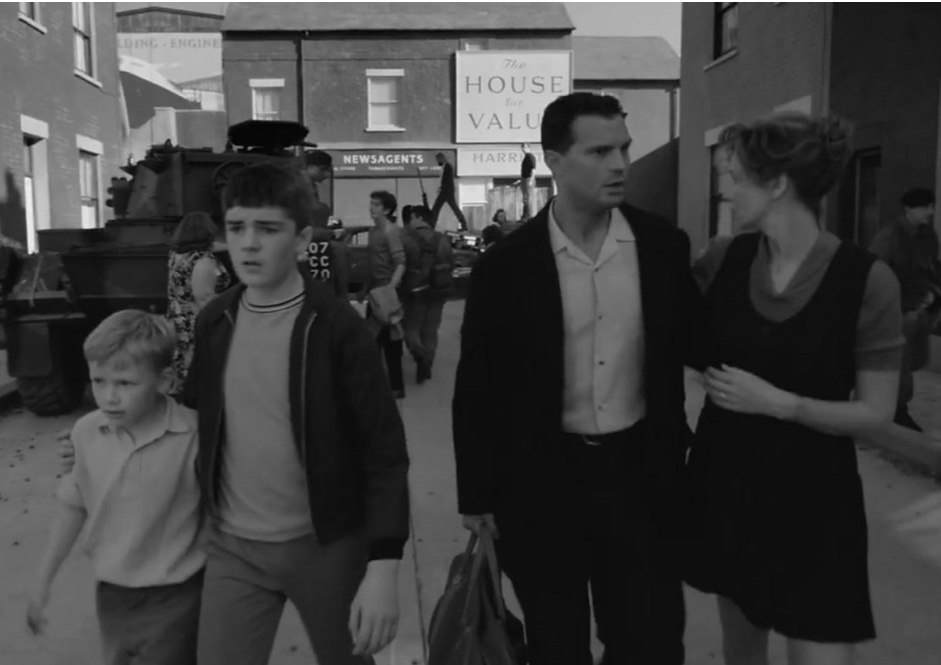
Belfast, the latest offering from Kenneth Branagh, billed as a semi-autobiographical account of his childhood in Northern Ireland is a heartfelt film about home, family and the ties that bind us to both. In the end, for the characters in Belfast, it comes down to a choice – as their neighborhood is consumed by the civil unrest that pits Catholic vs Protestant in the late 1960’s – do they leave the only home they’ve ever known or save the only family they’ve ever had.
While nowhere near as profound, as of this writing, you the viewer have a choice to make as well – do you rent Belfast right now from the comfort of your easy chair for $19.99 or play the proverbial waiting game and see it when the asking price drops to $5.99. For me, it was a no-brainer because with the exception of makin’ whoopee with Helena Bonham Carter while married to Emma Thompson, I’ve liked everything that Kenneth Branagh has done. If you are even remotely in that camp (sans your views on the Thompson/Branagh relationship) my advice is go for it – you won’t regret it.
Through interviews and press releases, Branagh has made it clear that Belfast is a very personal film for him. In what some may think is a gamble, he chooses to tell the story through Buddy, a 9 year old boy played by Jude Hill. Wherever or however Mr. Branagh found this kid, the gamble paid off because the young actor is pure gold. Hill quickly brings Buddy to life, delivering a cornucopia of innocence, wit and energy that ultimately becomes the soul of this film. You don’t need an MFA from USC to quickly realize that it’s Buddy who is the vehicle for this filmmaker’s vivid and profound memories of his boyhood days in Northern Ireland’s Belfast.
But young Master Hill is not the only shining star in this beautifully constructed cast of actors. Every single member delivers a pitch perfect performance starting with Caitriona Balfe and Jamie Dornan who play Buddy’s parents and are simply referred to as Ma and Pa. Balfe’s Ma is a vision of beauty, grace and determination, wrapped in a mother’s love, amid the violence and prejudice of the Belfast neighborhood she calls home. Well known for starring in the long running series Outlander, she does an admirable job of ‘owning’ her scenes. This is especially evident when she drags Buddy back to a Catholic owned grocery store, in the middle of a looting spree. Stepping over broken glass, fallen shelves and a violent crowd she attempts to have him replace a box of laundry detergent – he was encouraged by others to steal – back on one of the store’s few remaining shelves. It’s a powerful scene and emblematic of an all around strong performance. And Dornan, as the epitome of stoicism, also delivers a solid performance as the father who’s only goal is to move his family as far away from danger as possible. His GQ status as one of Britain’s best dressed men not withstanding, Dornan’s performance is powerful yet understated. In a page taken straight from a Hollywood heroes manual, at the end of that same looting scene, he appears out of nowhere to save his family from harm.
It seems fitting that Dame Judy Dench would contribute to this strong cast of characters as well. Her performance as Granny along with Ciaran Hinds’ Pop provides the silver and gold that frames this family portrait and lends a degree of gravitas that only renowned actors of this caliber can deliver. Hinds’ last words to Buddy, “I’ll never be anywhere you can’t find me,” are not only touching but serve as the pillar upon which this family’s love of home and heritage rest.
Branagh’s choice of employing the gravely voiced Van Morrison for the majority of the film’s soundtrack works well and seems perfectly fitting. While 15 years Mr. Branagh’s senior, Van Morrison also grew up in Belfast, not far from the neighborhood Buddy and his family call home. The choice of Morrison classics echoes not only the sadness of the family’s situation but also the love and optimism they share for a better life. Interestingly enough, one of the more poignant moments in the film is not supported by Morrison’s music at all but by the often remade tune “Everlasting Love,” made famous in that same era by the London based band Love Affair and this time sung by Dornan himself. Sure it’s meant to be a crowd pleaser but this stirring scene where, in typical Irish fashion, the family celebrates life and love while dealing with grief, is one of the many payoffs in this beautifully constructed narrative.
Cinematically, you can count on Kenneth Branagh to make classic choices. From the tight shots of neighborhood alley ways, to the weathered homes and shops, it all works. The traditional approach that Branagh takes delivers a realism that perfectly suits the film. Some have criticized Branagh for what they think is a ‘rose tinted’ version of Belfast in 1969. But the car bombs, barbed wire, armored vehicles and black and white images prove that there’s nothing colored in this film except the occasional glimpses of life outside the neighborhood.
In the final balance, Belfast is an expertly crafted 90 minutes that’s filled with award winning performances and first class imagery. While Kenneth Branagh is upfront about the personal nature of Belfast, one cannot help but think that in creating this film he also means to pay homage to the countless families all over the world who face or have faced the very same choices. To see and appreciate that through the lens of a seasoned filmmaker is a bargain at any price.
In the early days of January 1999 HBO displayed a promotional billboard in Times Square. It was dominated by a larger than life brooding image of James Gandolfini. With arms folded across his chest and flanked by smaller images of supporting characters it offered an invitation across the top in bold red letters – “Meet Tony Soprano.”
For 86 Sunday nights over the course of 8 years and countless reruns, people not only accepted that invitation but responded in such a way that it catapulted premium network television into a new arena. Like it or not, from Band of Brothers to Game of Thrones, The Sopranos became the gold standard upon which every one of them was judged. Many consider it better than all the rest. But whoever coined the phrase, “Can’t ask for better, only more,” has yet to see David Chase’s latest Sopranos offering , The Many Saints of Newark. Billed as a prequel which asks the question – Who made Tony Soprano? – after two hours and one minute you might still find yourself wanting for an answer. Or worse yet, asking the question… who cares?
For starters, it’s important to note that Many Saints is not a coming of age story about Tony Soprano. In fact Michael Gandolfini ,who portrays young Tony, doesn’t make his first appearance until well into the film’s second act. And that’s a crying shame because Gandolfini, who as everyone knows by now is the son of the late actor who originated the role, is pretty darn good. By nature or nurture, Gandolfini capably delivers the goods. From Soprano’s brooding undertones to his often overlooked astuteness, the 22 year old actor nails the younger version of the character that his father so expertly portrayed. Had the story followed the young Tony Soprano a bit closer, perhaps more fully narrating the yin and yang of the relationship he had with his paranoid, sharp tongued and depressive mother we might be talking about a far more insightful film. We might also be talking about how Vera Famiga was able to fully inhabit the role of Livia Soprano instead of simply impersonating the character made famous by Nancy Marchand.
Instead what we get is a film that tries too hard to tell too many stories in two hours. For the most part, its a glimpse into a very specific portion of the life of Richard “Dickie” Moltisanti, the legendary character that’s referred to but never seen during the show’s eight year run. The clever adoption of the film’s title to the literal translation of Moltisanti is a nice touch but thats where the cleverness stops. Alessandro Nivola, who plays Dickie presents as a more than capable actor but whether because of limited time or a specific talent gap for the part he simply doesn’t fill out the role. His lack of energy and presence makes it hard to believe that this is the guy who is responsible for Tony Soprano. And while Nivola’s character is responsible for a good portion of the film’s violence, the prototypical disregard for human life sequences seem overly predictable, gratuitous and formulaic as in “insert violence here.” His best scenes are when he plays opposite Ray Liotta, who in fact pulls double duty as two characters and hits home runs in both roles. There is no better example of how good Liotta is then when he’s portraying the remorseful Uncle Sally and delivers the line, “Pain comes from always wanting things.”
As for the famous supporting cast of crew members, Paulie “Walnuts” Gualtieri, Salvatore “Big Pussy” Bonpensiero and Silvio “Sil” Dante they collectively represent one of the more egregious sins of the whole production. Limited to one note each, the actors who portray them are relegated to continually repeating the same affect over and over again. This is particularly painful in the case of John Magaro who plays Silvio Dante. His channeling of Steven Van Zandt, the actor who so skillfully and artfully originated the role, reduces Silvio to something straight out of a comic strip. Someone should have tapped Magaro on the shoulder and whispered in his ear, “It was funny the first time.” And what’s up with John Bernthal, the talented actor who brought us Shane Walsh from the Walking Dead? This is the second time he seems to be the victim of a casting director’s bad day. Whether its Lee Iacocca or Johnny Boy Soprano, he just doesn’t seem to do Italian. As Corrado “Junior” Soprano, Cory Stoll delivers the film’s only interesting twist. While he lacks the richness and natural style of Dominic Chianese he does try hard and Stoll probably would have won our hearts had we been playing horseshoes.
So far we’ve discussed the formation of Tony Soprano and the tortured life of Dickie Moltisanti. But there’s a third element to this film and that’s the social commentary. Newark in the late 1960’s was a caldron of conflict and prejudice. Tucked within the shadows of New York City it was a time bomb waiting to go off. To his credit, David Chase takes this on. But much like the mobsters of Many Saints who watch Newark burn from the distance of their exburb nightclub we never really get close enough to understand. The multitalented Leslie Odom Jr who plays Harold McBrayer and the few other characters who travel in his orbit, need their own story. Interestingly enough, the brief epilogue, sandwiched in between the end title and the closing credits may just be a sign of things to come in that respect.
I’m an equal opportunity reviewer so I give fair time to the cinematography and the music. As far as the viewing experience goes – how much longer are we going to have to endure overly excessive CGI of panoramic backgrounds? I’m prepared to suspend reality when watching something out of Marvel Studios or other action/fantasy genres. But lately, particularly when I view a drama, I find myself becoming the guy in Diner who while searching for a black and white Emerson TV laments – “I don’t like color television, don’t like color for nothing. I saw Bonanza over my in-laws and it was not for me. The Ponderosa looked faked.” And 24 hours after seeing Many Saints I can’t remember a single song or musical tune which wasn’t the case when I was watching the Sopranos on HBO. I’m not sure whether to attribute that to a film score that lands flat or the fact that my short term memory isn’t what it was in 2004.
Prior to the October 1st premiere David Chase gave a number of interviews. On one particular late night show he made two points that are hard to reconcile. First he said you don’t have to see the show to watch The Many Saints of Newark. In as much as you don’t need to enter a secret “Sopranos Fan Passcode” before viewing, that’s technically true. But beyond the brief story arch of Dickie Moltisanti, that’s a tall order. From the striking familial resemblance of young Gandolfini’s performance to the inside jokes of the supporting characters, you may very well be saying to yourself – I don’t get it. But it was the second point that Chase made that’s stuck in my craw. He said to really appreciate the film, you should see it in a movie theater. Beyond a blatant attempt to encourage people to return to the cinema in a “post pandemic” world, the statement seemed out of line with the essence of The Sopranos. That’s because every Sunday night, Tony Soprano and his family came directly to you, magically delivered to your cable box. Over the course of the show’s run, characters grew, cultural references were coined, drama was delivered and humor was expertly inserted. Each week David Chase conducted a master class in character motivation and behavior, delving deeply into the Sopranos principal characters no matter how dark the path. And all that time, unfolding it on a screen a fraction of the size you’d find at your local multiplex – no popcorn required.
Sadly, in the final analysis, that’s the principal flaw in The Many Saints of Newark. Dickie Moltisanti and young Tony didn’t need more, they needed better.
For many have contributed from their surplus wealth, but one has contributed all he had.
————
It seemed as if his hands appeared out of nowhere, amidst the rapidly moving arms and elbows of volunteers. We were focused together on a simple task, unloading donations in the garage of a community food pantry, when he approached us.
“Help,” he said — more of a statement than a question.
“You want to help us?” said someone.
“No English.”
“That’s ok brother, busy hands are a universal language,” said another.
And with that and no other direction, he jumped in with the rest of us. Seamlessly becoming another volunteer, muscling heavy boxes of donated produce, meats and canned goods.
Working side-by-side with us for at least a half hour, no job was too small or too large for him.
Anticipating each task, he grabbed a stack of plastic bags and with outstretched hands held them open as his fellow volunteers counted out day-old bagels.
One by one, clients exited the pantry, passing the unloading area with shopping carts of groceries. For some, family or friends waited to help them home. As they left, we said goodbye, wishing them a good weekend and God’s blessings. Our new volunteer smiled and nodded at each one too.
Before much longer, a woman appeared with her own cart of groceries, glanced in his direction and said, ”Estas siendo voluntario?”
“Sí,” he replied.
Then to us she smiled and said, “That’s good, they can always use help.”
And with that, he walked towards her, took hold of the cart, and together they walked out of the garage, into the parking lot and out of sight.
It was clear that our newfound colleague gave more than all the others that day — for he contributed all he had.
While we didn’t know much about him, he reminded us, once again, that the line between giving and receiving is a fine one indeed.
Within it, resides a staple that each of God’s people hunger for – the dignity that feeds us all.
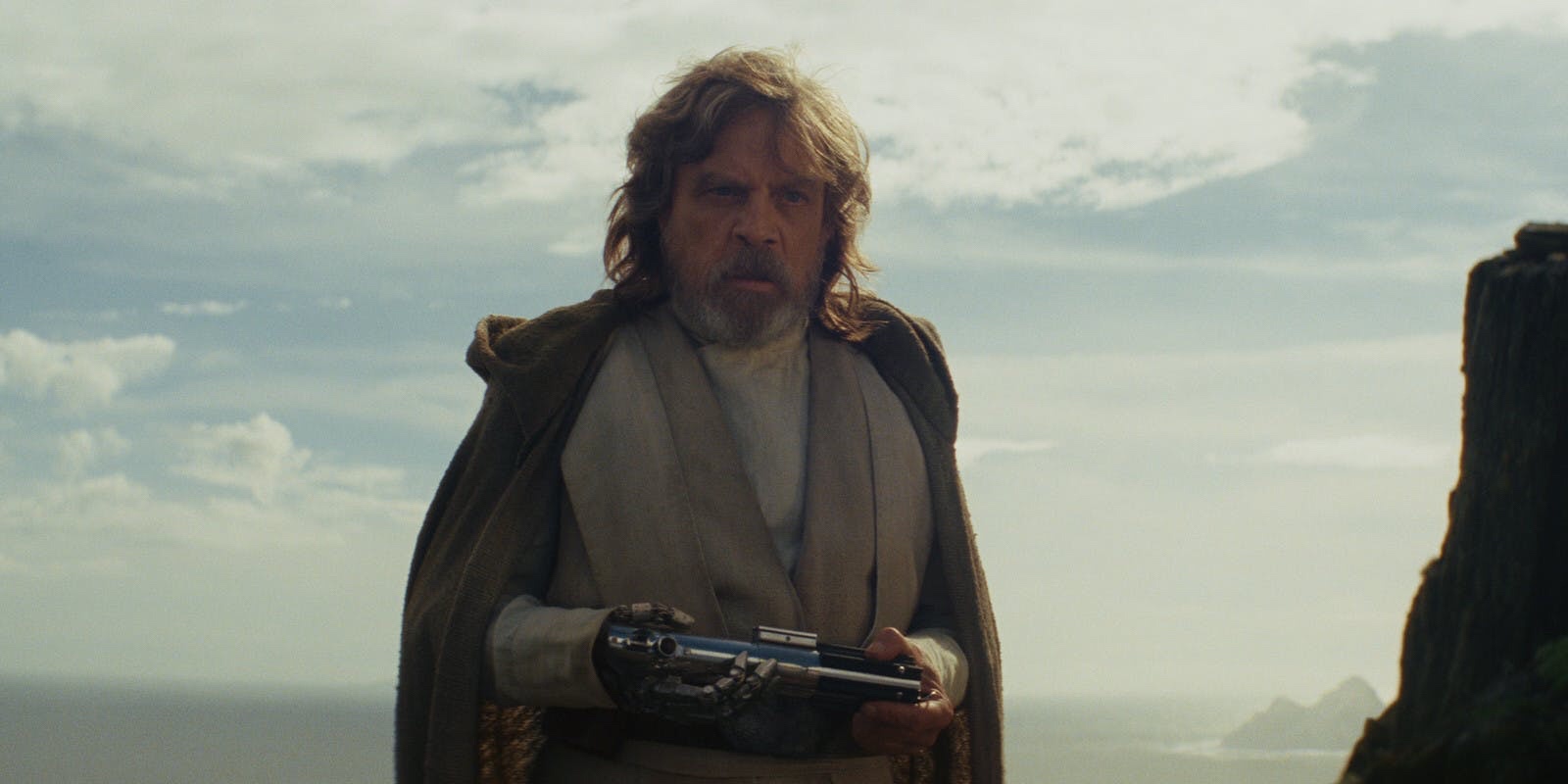
The latest edition of Star Wars, The Last Jedi is one step above Mel Brooks’ Space Balls. I stole that from an audience reviewer on Rotten Tomatoes but it’s a reasonably accurate characterization. The problem with that is Mel Brooks intentionally produced a successful comedic farce. The producers of Last Jedi on the other hand attempted to deliver something else and by most measures unintentionally delivered a product that looks remarkably closer to Mr. Brooks’ effort.
Simply put – Last Jedi, directed by Rian Johnson, does nothing to honor or advance the legacy of the Star Wars saga or the richness of its original characters and it reduces Luke and Leia to little more than props for lazy dialogue such as “use my personal code” and “there will be more Jedi after me.” True enough, Carrie Fisher and Mark Hamill would never be mistaken for Bette Davis or Lawerence Olivier but they deserved more to work with than this sad excuse for a screenplay.
There are other aspects of the film that are broken as well including the indiscriminate placement of women in roles occupied by men in prior episodes. It doesn’t work and it’s an insult to female actors who strive for role parity in Hollywood. Laura Dern, through what appears to be no fault of her own, is particularly ineffective as second in command to Carrie Fisher. She glides along in a strikingly attractive gown and purple tinted hair but there’s little substance or reason for her character beyond the temporary absence of Ms. Fisher. And then there’s Rey – what could have been a truly complex narrative with Daisy Ridley’s portrayal of the emerging first female Jedi – but alas, it’s wasted. The character is poorly developed and leaves us wondering about the value of her role beyond a feeble attempt to encourage Luke Skywalker to “get back in the ring and fight.”
There’s plenty of blame to go around for the men as well. Mark Hamill falls flat in his attempt to channel Alec Guinness as the elder Jedi. He lacks the gravitas of Guinness and other fine actors who have the ability to take limited dialogue and deliver tour de force performances. There’s almost too much of Oscar Issac, crashing and thrashing as Poe Dameron the Rebel commander who thinks that direct orders from General Leia are merely a suggestion. He bounces around the screen to his own special tune in what may be one of the most annoying performances of 2017. The villain Kylo Ren is the sole bright spot in the film, not so much due to the richness of the character but because Adam Driver is simply a good actor.
I love the Disney business model but since they acquired Star Wars it appears they have re-engineered this ground-breaking franchise into a series of consumable thrill ride and theme park experiences. On more than one occasion I found myself thinking that much of this is bound to show up in Orlando real soon. I’m not sure I blame them given the amount of money they have invested and the success of their past cross marketing efforts but its still a shame.
Fear not… Star Wars, The Last Jedi is a capable thrill ride with production values worthy of the big studio that delivers it and it will most certainly go well with a large bucket of popcorn. But it lacks an essential element which is the soul of any movie – a story. Sadly, this vaunted franchise has lost the narrative thread that seemed to magically renew itself over and over again under George Lucas’ watchful eye and creative genius. And with a Tomatometer of 93% one is left to wonder if Disney didn’t somehow spike the buttered popcorn with a secret potion to deliver a Jedi Mind Trick that convinced critics to believe- these are not the droids you are looking for.
But hold the butter please, I prefer my popcorn straight and I’m perfectly cozy right here with the remaining 7%.
Early on in Dunkirk, a boy in his late teens asks; “Mr Dawson, where are we going?” The straightforward reply“Into war, George” puts everyone on notice that we are about to enter into a highly visceral and intimate cinematic experience. And let’s get this out now – director Christopher Nolan’s depiction of this historic effort to rescue nearly 400,000 British, French, Belgium and Canadian troops in the face of an advancing German Army in the early days of World War II is the work of pure genius. It may not be the greatest war movie ever made but it is perhaps the most unique and inventive account of war ever presented in our time.
Fans of Nolan know that he likes testing the limits of the cinematic narrative. Films like Memento, Inception and even elements of his Batman Man Dark Knight Trilogy require an investment on the movie-goer’s part as this director, whose work at times is referred to as scientific, takes you on a journey through his mind’s eye. Dunkirk is no exception.
Told in three parallel panels – the Air, the Mole (Land) and the Sea – Mr. Nolan employs a non linear narrative to tell the story of the greatest wartime rescue ever. For those of us who didn’t go to film school that means the story unfolds from different points of view in a non-traditional timeline. You’ll see the same scene from different perspectives, each important to the overall narrative but only how and when the point of view character sees them. So munch that popcorn slowly because you won’t be getting up for any refills. But here’s the good news, Nolan presents this story in 106 minutes and what he captures in that relatively brief window is nothing short of remarkable.
The POV duties for each principal aspect of the film are placed in the hands of three very capable actors; Tom Hardy, Mark Rylance and Fionn Whitehead. And while this is a big movie, Nolan makes a bold choice – he effectively places each man in a relatively confined space. It creates a tautness to the film that works incredibly well and pays off throughout the story.
For Hardy, who could read a shopping list from Amazon and be entertaining, it’s from the cockpit of a Supermarine Spitfire. Shrouded in flight helmet, scarf and oxygen mask for much of the film, his depiction of the RAF pilot Farrier seems incredibly real. It’s a risk for an A list actor to take on a role with such a narrow visual but Hardy hits a homerun. His ability to communicate using his eyes, facial muscles and the tonality of his radio calls is pure movie star.
Fionn Whitehead a Hollywood newcomer is Tommy who we first find running for his life through the narrow streets of Dunkirk. It’s through Tommy’s eyes that we get our initial glimpse of the shore and as his field of vision broadens we see the vastness of the beachfront. Through Tommy we begin to appreciate the countless numbers of men lined up for what appears to be a hopeless rescue. Later in the film he seeks refuge in the hull of a beached fishing trawler. Along with others he waits for the tide to carry the vessel to sea and as they wait each moment is more suspenseful than the last.
For the Sea, Nolan counts on the world class Rylance. His Mr. Dawson pilots the Moonstone representing the 700 or so private vessels and British citizens that left Ramsgate, England for the beaches of Dunkirk to save their fellow countrymen. Along with his son Peter and Peter’s friend George, they make the dangerous trip across the English Channel. Utilizing Mr. Rylance’s character alone to represent the vastness of the citizen rescue effort was a risk. But as the saying goes, risk equals reward and Mark Rylance rewards the viewer with a fine performance, filmed almost entirely from the pilot wheel of the motor yacht. As with the other two perspectives, it’s less about the dialogue and more about the situation and the expressive nature of the actors that makes this work as one by one they save the lives of stranded soldiers and airmen.
How do we keep track of these three as they fly, sail and run around Dunkirk? Who brings this all together for us? Well that would be Kenneth Branagh as Commander Bolton who one might say has a minor role. But there’s nothing minor about Branagh’s purpose in the film. Start to finish we find him on the dock of ‘the Mole’ which is the only deep water spot that can handle a vessel with a draft greater than three feet. It’s Branagh who, as he directs the wounded and the weary, explains that and so much more to us. And while Hardy, Rylance and Whitehead are doing a spectacular job on the inside looking out, its Mr. Branagh’s Commander Bolton who takes all the action in as the ‘viewer’- he witnesses Dunkirk. No small feat for an actor who gets limited screen time and few lines but the accomplished Branagh is superb and does an admirable job of being the glue that holds this story together.
Far from a character study, Dunkirk focuses all of its energy on a particular point in time. We learn little about these individual soldiers and sailors beyond their mission and from my ‘point of view’ that’s just fine. Because the Miracle of Dunkirk represents more than any one character could possibly portray and in that respect the British-American Nolan has captured it perfectly. For in creating this film he not only pays homage to his craft but also to a far greater and enduring constituency – those who vowed to never surrender.
In the late spring of 1968 on a warm Saturday afternoon, I walked up Staten Island’s Tysens Lane to the corner of Hylan Boulevard with a friend from elementary school. Crossing Hylan we headed to the shopping center that was anchored by the Fox Plaza Theatre. In black plastic letters the theater’s marque announced the current feature; Planet of The Apes- Charlton Heston and Roddy McDowall.
Once inside we got our popcorn, had our tickets torn in half and took our seats. We watched in awe as the special effects depicted an advanced civilization of simians. Roddy McDowall and Kim Hunter wore ape costumes, Charlton Heston wore a loincloth. By the time we got to the bottom of the tub of popcorn Charlton Heston was pounding his fist on the beach yelling, “You maniacs…..!!!!” We looked at each other with surprised expressions that only grammar school kids can muster and we muttered typically juvenile foul words to describe our reaction to the film’s ending – as only kids who are about to become teenagers can.
Nearly 50 years later and I’m back watching Apes movies. I’m miles away from Hylan Boulevard, my ticket’s on my phone and I pay 6 dollars for the smallest bag of popcorn possible which I finish before the end of the title sequence – do I have to remind you how long the previews are these days? Yes a lot has changed but not the feeling you get when you see a good movie and War for the Planet of the Apes is a really good movie.
There’s a number of reasons why: It is shot in spectacular fashion reminiscent of past day epics the likes of which compare to The Bridge on The River Kwai, Lawrence of Arabia and The Ten Commandments. The use of performance capture technology is stunning, you’ll be hard pressed to think that Andy Serkis is anything less than Caesar in the flesh. The film is extremely well scored; soaringly beautiful and hauntingly ominous at all the right times. And finally, while the film’s action sequences rival those of other blockbusters, ‘War’ incorporates an element of humanity rarely seen in films of this genre.
There are outstanding performances from just about every member of the cast. Fans of Andy Serkis will know him from Lord of the Rings as the memorable Gollum. Widely regarded as the preeminent performance capture artist in the business Serkis’ expression and tonality are superb. Alone, it’s enough to narrate the plight of the apes who are banished to Muir Woods and merely seek a better life. Serkis as Caesar leads a small group of apes as they search Northern California for the evil Colonel who commands the last of the remaining human soldiers attempting to wipe out the apes.
Steve Zahn who Rotten Tomatoes says “has made an art form out of portraying dysfunctional losers and likeable freaks” is Bad Ape – so named because he was raised in captivity and constantly reminded that he was ‘bad’. He brings a much needed levity to an otherwise deep and at times profound story.
Karin Konoval, Terry Notary and Toby Kebbell round out the cast of apes that join Caesar on the quest and each brings an important dimension to the film. Konoval is particularly memorable as the kind hearted Maurice. There is not much spoken dialogue among the apes but what is there is priceless.
Woody Harrelson as the Brandoesque Colonel is over the top and a far cry from his days behind the bar at Cheers. His performance is chilling and he is the catalyst for a relentless form of divisiveness that in a way exposes the underbelly of this film – the lack of humanity in humanity. Harrelson is at his best when he is one on one with Serkis’ Caesar. His attempt to articulate his misguided rationale for destroying the apes is perhaps the highlight of his performance.
What makes War for The Planet of The Apes such a good film is that it can be enjoyed on so many different levels. Yes, it’s visually magnificencent, well acted and provides seat of pants excitement. Yet beyond that it’s also a profoundly told cautionary tale. For as the Moses-like Caesar strives, amidst the chaos of a divided world, to lead his people to a better life you might just agree that the central message of this story is something for all humanity to heed – the eternal value of mercy. And that my friends is as relevant today as it was in 1968.
Spider-Man Homecoming represents the third time in 15 years that this comic book hero has been re-booted for the movies. Directors Sam Raimi and Marc Webb got plenty of mileage out of the academically brilliant but awkward teenager turned superhero with Tobey Maguire and Andrew Garfield respectively. Now the 36 year old Jon Watts, with a resume that lists Cop Car and Clown as his noteworthy efforts, takes aim at this successful franchise. He brings a fresh take to the story that’s filled with action and excitement. Is the third time the charm? Is a tub of buttered popcorn hard to resist?
Spider-Man Homecoming features 21 year old Tom Holland, of West End Billy Elliot fame, as the socially inept high schooler Peter Parker. Now movie goer beware, Watts provides no narrative exposition of how Peter Parker became Spider-Man – there’s an assumption that everyone knows he was bitten by a radio active spider and that you have already seen the 2012 version of The Avengers which culminates in ‘the Battle of New York’ because that’s where the movie picks up.
These stories always seem to incorporate a solid citizen who turns villainous due to a random injustice. This time is no exception as Michael Keaton portrays the hard working contractor Adrian Toomes who, in the film’s cold open, while cleaning up alien rubble is summarily dismissed due to government red tape. But with the help of a few bobbles of alien ‘glow in the dark stones’ (remember to catchup on The Avengers) and a few devious pals, Toomes becomes the Vulture and voila! – We have our good versus evil story. I enjoyed Keaton in this role, he’s a good comic book foil – deviously entertaining and filled with expressive wit and a dash of darkness.
Right on the heels of Keaton, Robert Downey Jr appears and shifts his Tony Stark/Iron Man character into high gear. He keeps the revs up in limited but memorable scenes. Since rebooting himself in 2008 as Iron Man, Downey 2.0 continues to demonstrate that he is marvelously adroit at delivering spot on performances. Visually and verbally his portrayal of the over the top Iron Man’s alter ego Stark is wildly entertaining and better than the likes of any Clark Kent or Bruce Wayne that’s ever hit the screen.
But let’s get back to Tom Holland because he’s refreshingly vibrant and brings a welcome change to the Parker/Spidey role. While Maguire and Garfield both incorporated a bit of brooding edge to their characters, this time under Watts’ direction young Holland will have nothing of that.
This is a Spider-Man filled with youthful exuberance, unboundless energy and a naïveté that throws caution to the wind. And while the story may lack a foundational background upon which to build this character, it clearly makes up for it as Peter Parker learns how to go from high schooler to super hero. Tom Holland does an admirable job, bringing a well choreographed physicality to the role, surely a byproduct of his London days as Billy Elliot.
Typical of summer blockbusters, there’s a cavalcade of actors in supporting roles. All of the new faces play fellow high schoolers providing context for Peter Parker’s trials and tribulations. I can’t say any of the performances standout and it remains to be seen if one or more of them will emerge as stars in their own right as they leverage the success of this film.
Better known faces are there too including; Tyne Daly, Donald Glover, Jon Favreau (reprising his Iron Man right hand man duties) and Marisa Tomei as Aunt May – yes she’s old enough to be somebody’s aunt. There’s even a Gwyneth Paltrow cameo to keep the Pepper Potts/Tony Stark romance alive. All of them are up to the job albeit Ms. Tomei would have done even better in a larger role.
Yep, Spider-Man Homecoming delivers – its good clean action filled fun and most importantly it’s fresh. So get your phone out, click that movie app and buy yourself a couple of tickets. And hey…save a little of that bucket of buttered popcorn for me, I might just show up to see it a second time.
Any viewer of Edgar Wright’s Baby Driver will immediately be struck by its energy, creativeness and soundtrack – it never lets up. If you can – think La La Land meets Pulp Fiction. Highly stylized from both a visual and musical standpoint the film is captivating. The creative use of music breaks new ground for a film with this much action and like me, you may be convinced this is a thrill ride for the ages. But Baby Driver ultimately runs wild and as it speeds into its third act it becomes a victim of its own excesses. It’s kinda like a velociraptor in Jurassic Park – beautiful and a marvel to watch until it escapes from its cage and starts to devour everything in sight. Jurassic Park though is science fiction, heist movies are supposed to be grounded in a semblance of reality. So when Baby Driver goes off the chain you might just be left wondering… where is Edgar Wright going and why?
Ansel Elgort is adequately cast as the young but talented wheel man who goes by the name of Baby, a pseudonym for his real name which is Miles, another pseudonym (albeit a lame one) because, you know…he drives cars – ok, I digress. But with limited and not particularly memorable dialogue Elgort seems to be more of a visual prop for the film than its central character. And while this role may not serve as a resume builder for the actor’s bid for the next Henry VIII – it does work in the overall style and theme of the film. Constantly adorned in Ray Bans and ear buds, the cool as a cucumber Elgort’s every step and lip synch is expertly choreographed as the music blares through his head and onto the screen. In effect he becomes the vehicle for this marvelously diverse and creative soundtrack that makes the film so watchable. And for all intents and purposes it’s the music that becomes the main character, keeping time with the action and transforming the movie into something more than just another heist story. Adding to the excitement, young Ansel’s character can drive the heck out of just about anything with a steering wheel. The high speed careening through the streets of Atlanta is not only entertaining but technically believable and pays a remarkable homage to the likes of Bullet, Ronin and the French Connection.
Getting back to the script, all is not lost in that department for actors Jamie Foxx, Jon Hamm and Kevin Spacey who play the really bad guys. Their characters are rich in clever dialogue and their performances are rewarding across the board as each actor executes up to his veteran status. Foxx and Hamm are particularly good as the unpredictable and at times psychotic heist men who will stop at nothing once the clock starts ticking. Spacey on the other hand plays Doc, the thoughtful but equally merciless mastermind planner who sees all the angles ahead of time while leaving the stick’em up part to everyone else. He pulls all the right strings in his performance but unlike Foxx and Hamm, it’s a cadence and rhythm we’ve seen before in his other bad guy roles. There are supporting roles for Lily James and Eiza Gonzalez as love interests for Elgort and Hamm respectively but sadly neither character is developed enough to give either woman a chance to demonstrate her skill. And in a twist you can see coming from a mile away Kevin Spacey’s bad guy turns out to be not so bad after all.
It’s at this point in the film (when Spacey turns out to be the bad guy with a heart) that everything starts to go off the tracks. The level of violence increases by an order of magnitude that almost makes it unwatchable and unbelievable. An otherwise incredibly suspenseful diner scene is needlessly marred by violence and gunfire that doesn’t support the narrative. To make matters worse, there’s a stretch where Jon Hamm is transformed into an unbecoming version of the Eveready Bunny who just won’t die. It’s a waste of all the hard work he puts into the character and leaves him to deal with a less than flattering Terminator style demise. Director Edgar Wright makes no secret of the fact that he draws much inspiration from Quentin Tarantino and for the most part during the heart of the story it pays off. Yet one is left to wonder whether at one point or another Tarantino himself would have yelled – Cut.
It’s no surprise that Baby, who had a rough childhood, is a victim in all of this and in an effort to bring the story back to center, Wright attempts to put a bow on the film with a brief but well stylized denouement. It’s an admirable effort and left me feeling somewhat better. But I was still a bit unsatisfied because when all is said and done Baby Driver is a good film that could have been great if its director had exercised a little restraint. Perhaps Mr. Wright should have taken a cautionary lesson from Jurassic Park – cleaning up a mess is hard, sometimes it’s just easier to keep an eye on the cage.

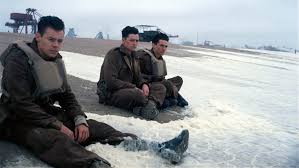 Early on in Dunkirk, a boy in his late teens asks; “Mr Dawson, where are we going?” The straightforward reply“Into war, George” puts everyone on notice that we are about to enter into a highly visceral and intimate cinematic experience. And let’s get this out now – director Christopher Nolan’s depiction of this historic effort to rescue nearly 400,000 British, French, Belgium and Canadian troops in the face of an advancing German Army in the early days of World War II is the work of pure genius. It may not be the greatest war movie ever made but it is perhaps the most unique and inventive account of war ever presented in our time.
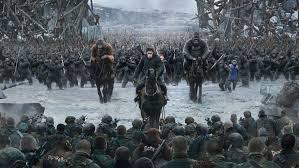 In the late spring of 1968 on a warm Saturday afternoon, I walked up Staten Island’s Tysens Lane to the corner of Hylan Boulevard with a friend from elementary school. Crossing Hylan we headed to the shopping center that was anchored by the Fox Plaza Theatre. In black plastic letters the theater’s marque announced the current feature; Planet of The Apes- Charlton Heston and Roddy McDowall.
 Spider-Man Homecoming represents the third time in 15 years that this comic book hero has been re-booted for the movies. Directors Sam Raimi and Marc Webb got plenty of mileage out of the academically brilliant but awkward teenager turned superhero with Tobey Maguire and Andrew Garfield respectively. Now the 36 year old Jon Watts, with a resume that lists Cop Car and Clown as his noteworthy efforts, takes aim at this successful franchise. He brings a fresh take to the story that’s filled with action and excitement. Is the third time the charm? Is a tub of buttered popcorn hard to resist?
 Any viewer of Edgar Wright’s Baby Driver will immediately be struck by its energy, creativeness and soundtrack – it never lets up. If you can – think La La Land meets Pulp Fiction. Highly stylized from both a visual and musical standpoint the film is captivating. The creative use of music breaks new ground for a film with this much action and like me, you may be convinced this is a thrill ride for the ages. But Baby Driver ultimately runs wild and as it speeds into its third act it becomes a victim of its own excesses. It’s kinda like a velociraptor in Jurassic Park – beautiful and a marvel to watch until it escapes from its cage and starts to devour everything in sight. Jurassic Park though is science fiction, heist movies are supposed to be grounded in a semblance of reality. So when Baby Driver goes off the chain you might just be left wondering… where is Edgar Wright going and why?
 Writing Act Three