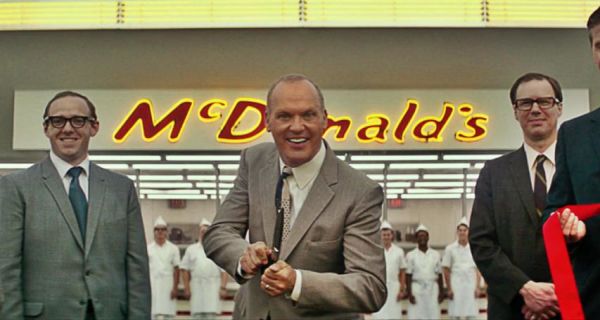
The Founder – Michael Keaton Channels Ray Kroc and Scores a Big Sale

dims.jpeg

20 minutes into The Founder, Michael Keaton is pacing in the parking lot of a Southern California burger stand waiting for the owners to arrive.  There’s nothing remarkable about his pacing or the fact that he is doing it in the parking lot of a burger stand.  In fact Keaton paces and performs similar affects in the first 20 minutes of the movie as he portrays an impatient man with big dreams who at 52 is relegated to selling milkshake multi-mixers to diner drive-in managers half his age.

But this time its different, Keaton who’s pitch perfect performance as uber salesman/marketer Ray Kroc has finally hit on something that he believes is nothing short of the “new American church” – and its “pastors” are Nick Offerman and John Carroll Lynch as Richard “Dick” and Maurice “Mac” McDonald.

The fast food industry in 1954 was anything but fast and most of the establishments of that day struggled to generate a profit.  Frequented by teenagers and slick greasers with little cash and held back by inefficient carhops that served inconsistently prepared food – it was anything but a family friendly environment.

Dick and Mac McDonald changed all that with a humble offering on a small plot of land in San Bernardino, California.  They developed a thriving business by narrowing down the menu, replacing all the china and flatware with paper, sending the carhops packing and asking customers to wait in line.  What they offered in return was a consistent product, delivered fresh and hot into the customers left hand while their right hand was still reaching in their pocket for the 35 cents to pay for the meal.

When Kroc gets an order for six multi-mixers he figures its a mistake.  How can a burger stand, in a one horse California town, need to make 30 milk shakes at once?   Kroc –  “I’ve got an order here for 6 multi-mixers.” Dick McDonald – “Yea that was a mistake.” Kroc – “I figured as much.” Dick McDonald – “Better make that 8.”  And with that, Keaton’s character drives half way across the country, does a lot of parking lot pacing and every second of it is captivating.

Michael Keaton who has been on a run with terrific performances in films such as Birdman and Spotlight hits the trifecta with his portrayal of the doggedly persistent Ray Kroc.  Despite his age and modest success before meeting the McDonald Brothers, Ray Kroc was not your average salesman.  Years and years of swings and misses which might have mellowed others never stopped Kroc.  He remained fiercely competitive and at times even ruthless, telling Mac McDonald – “If my competitor was drowning I’d run over and stick a garden hose down his throat” and with a pause that only Michael Keaton can do he asks McDonald “Can you say the same?”  Keaton, in fact, nails this dimension of the fast food mogul who made McDonald’s a household name across the globe.

Famous not for inventing the fast food burger but for his idea of integrating it into the American way of life, he appears to channel Kroc and present his value proposition in a no holds barred performance.  His pitch to the McDonald brothers which presents a vision of a McDonald’s restaurant in every town, just like churches and courthouses is awe inspiring.  With laser focused eyes, a cadence that leaves you exhausted and fingers that point to non existent imagery above him, he delivers a convincingly powerful concept; “FLAGS! CROSSES! CROSSES! FLAGS!” and if that’s not enough, with arms and hands outstretched he delivers the close – “Arches boys, Golden Arches.  Right there… next to the crosses and the flags.”  Nick Offerman and John Carroll Lynch, eyes wide open and jaws slack with wonderment not only portray the McDonald brothers but also acted as proxies for this reviewer who was left in awe by Keaton’s performance.

There’s a lot of drama and story complexities here, from Kroc mortgaging his home to fund his first McDonalds to the creation of the Franchise Realty Corporation. The brainchild of Harry Sonneborn, well played by B.J. Novak, it effectively boxed out the McDonald brothers.  But none of it ever drags and that’s a testament to John Lee Hancock and his well paced directing

With Keaton’s home run and Offerman and Lynch’s solid performances, it’s easy to forget the remaining cast but Laura Dern deserves much credit.  Her portrayal of Ethel Kroc, Ray’s dutiful and loyal first wife is delivered with an understated elegance and poise. It leaves you with a further appreciation of this actor’s skill and talent.  The dinner table scene with Keaton where her only line is “please pass the salt” before he tells her, matter of factly, that he wants a divorce, is all Ms. Dern – her expressions, motion and manner are pure movie star.

History has proven that despite his remarkable late in life success, Ray Kroc was not a very good person.  His single minded focus left a number of casualties among those he worked with, those who trusted him and those who loved him.  And while his competitive nature was clearly responsible for turning McDonalds into the global restaurant powerhouse it became, for many years he falsely ordained himself the founder of the process upon which the company was built.  In doing so, he personally denied Richard and Maurice McDonald not only the recognition they deserved but hundreds of millions of dollars (perhaps even billions at this point) in royalties – to these innovators and their heirs.

When all is said and done, The Founder is an exceptionally good movie that doesn’t necessarily celebrate Raymond Kroc and in fact paints a portrait of Kroc that maybe only he could celebrate.  And while over the past few years McDonalds has been associated with everything that’s bad with America’s eating habits, its Golden Arches are indeed a symbol of America – its success and drive for innovation.   And in that respect we have Ray Kroc to thank for placing those arches among the many other ubiquitous symbols our country displays and holds near and dear – wherever and whatever they may be.
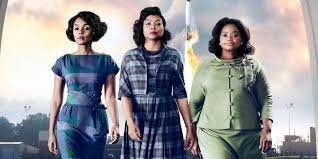
Hidden Figures -A Life Lesson in Perseverance


Unknown.jpeg

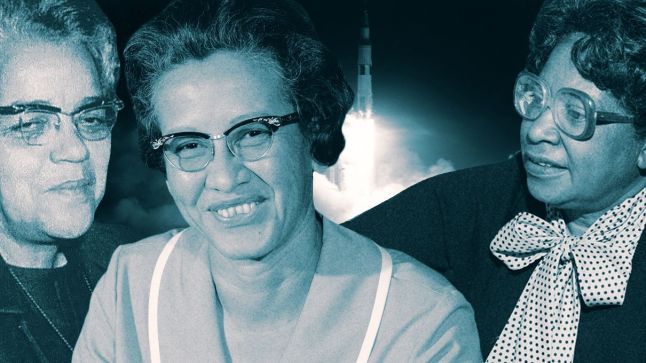
On February 20, 1962 NASA launched the first American into orbit around the earth. Powered by a Mercury-Atlas rocket every school child and adult alike knows that John Glenn was in that Mercury capsule. But most of us have little knowledge of those who made that achievement possible – especially the contributions of 3 African-American women; Katherine Johnson, Dorothy Vaughan and Mary Jackson. Thanks to Hidden Figures, a well crafted feel good movie about the pride and prejudice of one of the most significant periods in our history, their story is finally told.

Implied by its title, the film is a dual narrative which tells the story of the role these exceptionally talented women played during the Mercury space program as well as the indifferent and at times cruel treatment they suffered in a 1960s segregated Virginia. Kevin Costner as the fictional Al Harrison is perhaps the most recognizable cast member with the longest list of acting credits to his name. Cleverly inserted among the story’s real life historical figures, Coster is the glue that holds the narrative together. He’s well cast as a wry and seasoned pragmatist who embodies the voice of reason. He provides an added dimension of reason for the extraordinary efforts at NASA during the space race and eventually becomes the champion for the women of color at Virginia’s Langley Research Complex.

But its Tarija P. Henson, Octavia Spencer and Janelle Monae as Johnson, Vaughan and Jackson respectively that are the heart of this film. Accomplished, each in their own right, these actors are well cast. They concurrently embody not only the spirit of what was so right with America in 1962 but also, as they bear the unjust burden of color, what was so wrong.

Henson is particularly effective as the brilliant Katherine Johnson. Looking beyond the numbers, as only a true mathematician can, she tackles Glenn’s Friendship 7 re-entry calculations which others see as unsolvable because of the limitations of existing mathematical formulas. Reflecting the spirit of the American “can do” age she’s also the unfortunate recipient of its cruel inequalities. In a well executed scene where Costner’s Harrison questions her long mid day absences she stoically explains that she must walk a half mile across the campus to find the nearest colored bathroom. The fact that Harrison was oblivious to this in the first place is a sad reflection of a society conditioned to accept institutionalized segregation and the pain and shame it imposed.

With award-winning roles in films such as The Help and Fruitvale Station, its a joy to watch Octavia Spencer as Dorothy Vaughan. She is the epitome of someone who will not be victimized by her situation – a role model for anyone who feels that someone or something is holding them back. With dignity and perseverance she charts a path to break free. Spencer is an expressive actor who brings a level of familiarity and genuine endearment to her characters. It’s a talent that seems to reach beyond the screen and her performance in Hidden Figures is no exception. Held back because of her gender and color, she is the de facto supervisor, without the pay or official title, of a group of black women who toil as human computers just before the dawn of the IBM mainframe. Self taught in what was then the emerging computer language of FORTRAN and amidst numerous obstacles, she not only secures her own future but that of her entire team.

Although she has less acting credits to her name Janelle Monae as Mary Jackson is no less effective.  Determined to be NASA’s first black female engineer she lacks the required course work to qualify.  The only local school that offers what she needs is a white only high school.  Petitioning the court she wins the right to attend night school and takes her place in a classroom that’s not only all white but all male. The touching scenes between Monae’s Jackson and Mahershala Ali who plays her would be suitor and eventual husband are beautifully acted and poignant. These scenes alone are worth the price of admission.

Not everything in Hidden Figures works – Jim Parsons might play a physicist on TV’s The Big Bang Theory but he looks lost as head engineer Paul Stafford. His schoolboy looks betray him and his performance as Katherine Johnson’s overachieving and inconsiderate boss is unconvincing, particularly when he’s playing opposite Tarija P. Henson. Some have criticized the casting of Glen Powell as the astronaut hero John Glenn. At 28 Powell is decades younger than Glenn was in 1962.  But his patriotic workmanlike performance effectively depicts Glenn’s personality and his importance to the country’s space program. Rounding out the cast is Kirsten Dunst who plays the by the book supervisor to Octavia Spencer’s character. It’s an adequate depiction of someone lost in the prejudices and protocols of her time but it’s not a particularly memorable performance.

Because it tells two stories about our nation’s history, you’d be hard pressed to call this film the best depiction of either the space age or racism in America. But what Hidden Figures does remarkably well is teach us important life lessons about the value of perseverance and the danger, at times, of being too focused on relativism. That’s enough to make it “required reading” for all.

Post Script – Katherine Johnson, Dorothy Vaughan and Mary Jackson were acutely aware that they resided in a glorious era of opportunity but because of their gender and the color of their skin virtually none of those opportunities were available to them. Yet they refused -albeit no one would have blamed them – to be victims of their time. Harnessing their God-given talents, demonstrating the true value of their exceptional knowledge and intellect, they took their place among the “can do” heroes of their day and age. And within the example of those achievements they cleared a path for others to follow. The best thing we can do to honor them is to ensure that the trail they blazed never fades away.

a88b1a12-4313-4bd2-97c9-ac78fa2aed5d-1210-680.jpg

The Accountant – Good Tax Advice If Nothing Else


images.jpeg

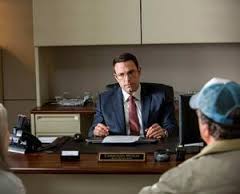
I’ll say this about The Accountant, when it’s over you won’t ask the person next to you “Wait…what about that guy in the black car? What happens to him?” Never, ok maybe one time but I can’t remember, have I ever seen a movie that creates so many loose ends and then goes to the excessive lengths that The Accountant does to tie them all up. If you have any questions by the time the credits roll it’s because you spent too much time peaking at your phone – which is quite possible given the silliness of the plot and Ben Affleck’s incessant mumbling. The only thing left to the imagination is how they got so many A list actors to sign up for this project.

The Accountant follows Christian Wolff  a high functioning autistic played by Ben Affleck. Mild mannered store front tax accountant by day, high rolling book cooker by night, Affleck’s character not only knows his way around a ledger but is also an expert in martial arts and really big guns. How all this happened is not only absurd but also an affront to anyone who cares for an autistic child.  It seems Christian is a product of a military father who channeled Robert Duval in the Great Santini, a tough older brother and a mother who left because she couldn’t deal.  Where’d she go?  That should be filed under no one seems to care except the screenwriters.

Anyway, the father thinks that by teaching his son to emulate Liam Neeson’s “special skills” he’ll be better equipped to deal with his disability and survive in the real world. So in a series of flashbacks that are pulled right out of The Karate Kid and An Officer and a Gentleman, Christian gets toughened up by subjecting him to street gangs and personal training that leaves him bloodied. The mere thought, even in a fictitious story, that violence is somehow a therapy for autism is offensive on so many levels that it’s enough to pan this movie – but wait, there’s more. Somehow he winds up in prison for two years and is tutored in the fine art of international book cooking by Jeffery Tambor who in a miscast role, plays a former accountant for the Gambino crime family. The next thing you know he’s dressed in black, has a hidden trailer packed with expensive weapons, passports and money of various countries and currencies.  All of this is apparently necessary as he travels the world in a quest to route money and numbers.

The roster of A list actors who really should have a sit down with their respective agents to insure they don’t get cast in a movie like this again include John Lithgow as Lamar Blackburn, a high-tech mogul who starts out respectable enough but ends up a ranting paranoid with shifty eyes. If you want to see Lithgow work with really good material, tune into Netflix’s The Crown and get a load of his magnificent portrayal of Winston Churchill. Next is J. K. Simmons who could read the instructions on how to assemble a bicycle and be more entertaining than what he’s given to work with in this movie. He plays a high-ranking treasury agent who blackmails a subordinate into investigating the true identity of the Accountant. Which begs the question, why would you blackmail a subordinate to do her job?? In one of the movie’s bizarre final scenes, Simmons assumes a reclining pose as if he’s in a therapist’s office and delivers an overly wrought monologue about his personal experiences with Affleck’s character. Again, any number of other J. K. Simmons movies are better examples of his acting prowess. And finally there’s Anna Kendrick who really should have passed on what appears to be a filler role and should be asking someone on her team “how did Emma Stone get the lead role in La La Land when I can sing and dance better than her?”

I’ve left Affleck for last because even with an overly complicated plot, poor casting and an absurd premise, The Accountant might have had a shot at being half way entertaining had it not been for Ben Affleck’s wooden performance. There’s virtually nothing to it except a blank stare, monotone delivery and the occasional raised eyebrow. And in a failed attempt to add some degree of dimension to the character, Affleck imbues Christian with a physical “tick.” Each time he uses his hands whether for eating or for complex work he rubs his fingers together and brings them to his mouth. It’s as if someone said to him “you know, Hoffman had the notebook, the colored pens and the toothpicks – what are you going to do?? “How about I spit on my fingers?” “Ok, if you can’t think of anything else, go with that.” Truth be told I’ve rarely seen much in terms of dimension in any of his roles and this is no exception. His brother Casey who seems to reside comfortably in his big brother’s shadow is a far more nuanced actor who doesn’t seem to get the credit he deserves.  (That may finally change now that he’s up for an Oscar in Manchester By The Sea).

So there you have The Accountant – but all is not lost –  if you’re running a small business out of your home and struggling with this year’s tax return, Affleck provides some great advice on what’s deductible and what’s not.  Otherwise, in this reviewer’s opinion, there’s no reason to rush out to see The Accountant or even pay to watch it on demand. In the very near future it will most certainly get picked up by a premium cable network and will run 759 times a month. That will afford you more than enough of an opportunity to catch up on the unread emails and text messages on your phone and not have to bug the person next to you with a question like  “whatever happened to the guy in the hat?”

Francisco

For many have contributed from their surplus wealth, but one has contributed all he had.
————
It seemed as if his hands appeared out of nowhere, amidst the rapidly moving arms and elbows of volunteers.  We were focused together on a simple task, unloading donations in the garage of a community food pantry, when he approached us. 
“Help,” he said — more of a statement than a question. 
“You want to help us?” said someone.
“No English.”
“That’s ok brother, busy hands are a universal language,” said another.
And with that and no other direction, he jumped in with the rest of us. Seamlessly becoming another volunteer, muscling heavy boxes of donated produce, meats and canned goods. 
Working side-by-side with us for at least a half hour, no job was too small or too large for him. 
Anticipating each task, he grabbed a stack of plastic bags and with outstretched hands held them open as his fellow volunteers counted out day-old bagels.
One by one, our clients exited the pantry, passing the unloading area with shopping carts of groceries. For some, family or friends waited to help them home. As they left, we said goodbye, wishing them a good weekend and God’s blessings. Our new volunteer smiled and nodded at each one too.
Before much longer, a woman appeared with her own cart of groceries, glanced in his direction and said, ”Estas siendo voluntario?” 
“Sí,” he replied.
Then to us she smiled and said, “That’s good, they can always use help.”
And with that, he walked towards her, took hold of the cart, and together they walked out of the garage, into the parking lot and out of sight.
It was clear that our newfound colleague gave more than all the others that day — for he contributed all he had
While we didn’t know much about him, he reminded us, once again, that the line between giving and receiving is a fine one indeed.
Within it, resides a staple that each of God’s people hunger for – the dignity that feeds us all.

Silence – The Intersection of Faith and Suffering as Seen by Martin Scorsese

Unknown-1.jpeg

For a quarter of a century, Martin Scorsese has been working on a project about 2 Jesuit priests in 17th century Japan, which he says is his own passion of faith. But, after two and 3 quarter hours, even if you are sitting in one of those cushy multiplex recliners, you might just feel like you’ve been there for at least a few of those 25 years.

But hang on, Silence is not a bad movie – it’s a thoughtful film with a clear and profound narrative. Inspired by the 1966 novel with the same title, Japan in 1640 sees Christianity as a challenge to its core beliefs and leadership.  Inquisitors are dispatched to cruelly force Christians and in particular the missionary priests who lead them, to renounce their faith. It’s a riveting story that raises serious questions about culture and beliefs – but admittedly it’s long and at times repetitive.

Missionary work in a closed society such as Japan in the day and age depicted must have been incredibly hard, frustrating and filled with danger. Even a casual observer of Silence who gets up for a popcorn refill would soon understand that without the lengthy narrative and the multiple examples of increasingly cruel torture.

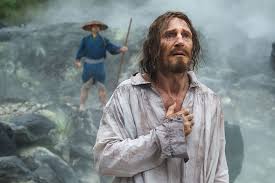
Sadly, it’s not the only flaw in the movie – Andrew Garfield’s performance in the lead role as Father Sebastião Rodrigues falls short. Garfield cannot summon the gravitas that cast members Adam Driver and Liam Neeson bring to their roles as fellow Jesuits who embark on this life-threatening mission. Perhaps this is because visually there’s no escaping his schoolboy looks or maybe I was just waiting for Spider-Man to appear. Either way, it seems to be a simple case of mis-casting in what is otherwise a technically good performance.

All that said there’s plenty to like about the  film. It’s shot in a breathtaking fashion with thoughtfully chosen locations in Taiwan and Taipei. The cinematography successfully recreates what one would imagine Nagasaki and its surrounding villages looked like in 1640. Rodrigo Prieto has worked with Scorsese before as well as other A list directors and it shows. There is a visual symmetry to the story that works very well and immediately transports you emotionally and viscerally to the time and place.

It’s also uniquely scored in a way that emulates the inherent natural beauty of the land while balancing it with the cruelty of the Nagasaki prisons where Garfield and his fellow Christians are held. In a head scratching twist, the husband and wife team of Kim and Kathryn Kluge, who wrote the music for the film, were disqualified from Oscar consideration because the score was not “musical” enough – which raises the question…. says who?

Liam Neeson, in a small but powerful role, plays Fr Cristóvão Ferreira the real life Jesuit missionary who renounces Christianity after years of being a role model of faith and courage to his fellow Jesuits. As others have previously noted, it’s refreshing to see Neeson in a role that allows him to exercise yet another set of “particular skills” beyond neck breaking action hero. His portrayal of the former Jesuit whose faith appears to be broken beyond repair is captivating and his stunning delivery of one of the story’s core concepts; the inexorability of belief, culture and environment is one of the high points of Silence. And while none of us have personal knowledge of 17th century Jesuits, Adam Driver’s portrayal of Fr Francisco Garrpe has a realism to it that seems to fit the story.

When all is said and done, Silence asks some serious questions albeit Scorsese may have been better served getting to them sooner. Some will walk away convinced that the central message is a cautionary tale about the lack of universality in religion and that missionary work, in some cases is futile. What is the value of attempting to impose a belief set on another in an inhospitable environment where it cannot flourish and grow? But that’s not the only message Scorsese is advancing and he makes that quite clear by using various methods – some overtly traditional and others somewhat subtler.

And for those that believe it, as it appears Scorsese does, the final message is both simple and profound – I carry your pain…always, I forgive you…always and in the silence of what may appear to be abandonment – I stand beside you…always.

Fences: A Lifetime of Boundaries, Real and Imagined


Unknown-2.jpeg

In August Wilson’s award winning play Fences, the central character, Troy Maxson, is a bitter man who always seems ready to fight off the next demon in his life. The product of a day and age that wholesaled bias and discrimination, Troy is so damaged by his situation that he’s incapable of celebrating the good fortune of others, even when they share his family name or skin color. In many ways he’s isolated himself from a world that’s changing but sadly, not soon enough for him. Indeed, beyond his job as a trash collector, building an actual backyard fence is a key element of the weeks, months and eventually years that pass in the story. Perhaps an allegory for the protective boundaries he’s created – imaginary lines that he dares himself and the people around him to cross.

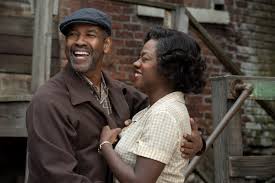
Produced for the stage 3 times, Fences has now been brought to the screen by Denzel Washington who not only delivers a stunning performance but also assumes directorial duties. Washington, along with the equally talented Viola Davis who plays Rose, the dutiful wife and mother and a strong supporting cast effectively elevate the work to a level befitting its standing as a stage classic. A once talented athlete, trapped in baseball’s Negro Leagues in a pre Jackie Robinson era, the Loman-esque character of Troy Maxson now lives in a world of could’ve and should’ve memories that slowly but surely detaches him from those around him.

Waxing on of glory days, Denzel Washington, as you would expect an actor of this caliber, has the ability to transport both Troy and the audience to a time before all of the trash collector’s hopes and dreams were dashed away. Having played him on Broadway, Washington knows this character well and he reprises the role masterfully. He expertly throttles Troy’s emotions knowing just how and when to turn joviality into all out rage. Ye, as good as he is, it’s Viola Davis’ Rose that steals the show.

Rose is the one true injured party in the story and there are many opportunities for an actor to overplay the role. But Davis never does, she keeps a calm reserve allowing only her eyes and the occasional change in tenor to reveal hopefulness in an otherwise disappointing life. The performance, understated at first, builds throughout the film and reaches tour de force as Troy slowly but surely finds the courage to reveal an indiscretion he’s been concealing. Davis’ entire performance is Oscar worthy, but the highlight clip will most likely be her emotional retort “I’ve been standing right next to you!” as Washington’s character laments “I’ve been on first base all my life!”

There isn’t a subpar performance in the entire cast as Russell Hornsby and Jovan Adepo play Troy’s sons and both prove they are up to the task of sharing the screen with Washington. Stephen Henderson no stranger to the stage and an August Wilson regular, plays ‪Troy’s friend Mr. Bono with what seems like practiced ease. Mykelti Williamson, in the role of the cognitively challenged brother is pitch perfect conveying the innocence and purity of someone who looks up to and admires his brother no matter how flawed he may be.

Moviegoers are forewarned though – Washington’s adaptation of Fences is not cinematic. Beyond a brief exception or two it limits itself, which one must assume is intentional, to the boundaries that would otherwise be part of a stage production. And while this ensures an accurate reflection of the original work, it also means that a lot of drama is delivered non-stop from the confines of the family’s Pittsburgh row home  backyard. This, without the benefit of the 15-minute intermission that would be afforded to playgoers can become a bit overbearing and might produce a mild degree of literary indigestion.

It’s certainly not the first time this has been done when adapting a play to the screen but admittedly there’s lots of content and emotion packed into this show. Perhaps it’s Washington’s way of truly emulating his character, building another imaginary boundary, this time for the audience, who at times may feel just as trapped as the Maxson family and at other times just a sympathic neighbor on the outside looking in. Whatever the reason, its worth the price for what should be considered an all around master class in acting.

La La Land – They Make Movies Like This…Again

Unknown.jpeg

In the not too distant future, on an episode of Jeopardy, under the category “Ground Breaking Cinema” don’t be surprised if this appears – The 2016 film that re-established a genre lost somewhere in the 1960s. And the response – in the form of a question of course – will be…What is La La Land?

If you’re reading this and still asking yourself that question then get, as soon as possible, to the nearest movie theater to experience Damien Chazelle’s masterpiece starring Ryan Gosling and Emma Stone. The 31 year old Chazelle of Whiplash fame has once again teamed up with his Harvard roommate, composer Justin Hurwitz, to deliver a movie musical that is both soaringly beautiful and intimately personal. And while there’s nothing new about a boy meets girl movie musical – La La Land is new and fresh everywhere else.

From the truly inventive opening number shot on a freeway overpass (a real one mind you with cars buzzing underneath) to the poignant epilogue that seamlessly portrays an alternate ending of coulda’ shoulda’ and woulda’s this is a fresh take on a cherished genre. And as each scene and song advances, Chazelle demonstrates that La La Land is every bit as good as movie musicals of the past and more importantly- how much better they can be in the future.

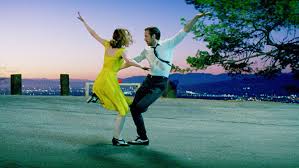
He starts with two very likable actors in Emma Stone and Ryan Gosling and as you’re trying to figure which famous couple they’re emulating it hits you that these two aren’t channeling anyone, they’re playing it themselves and it’s grand. Stone and Gosling’s on screen chemistry is so perfect that no one in the audience seems to notice that their collective singing and dancing would best be described as adequate. Neither one of these folks is a Broadway belter yet remarkably that seems to work to the advantage of both actors.

Reaching for that difficult note and dancing by the numbers makes their characters even more likable, realistic and endearing as they both struggle to survive in a town that’s all business and an industry that appears to have little room for heart. The singing and dancing – which dare I say are at times endearingly ordinary nevertheless – bring a practical accessibility to the story that in the past could only be admired from afar, when the likes of Astaire and Rogers graced the screen. Even when they simply gaze at each other there is that dreamy longing in their eyes and it’s downright romantic. Anyone who’s ever been in love or dreams of being in love is watching this couple vicariously as they head full steam into a classic Hollywood ending…right?  Well maybe – that will depend on your personal definition of happiness. Sure there’s a story going on here and life inevitably gets in the way.

Sebastian is a struggling musician who dreams of his own jazz club – he’s a purest who abhors the superficiality of LA –“they worship everything but value nothing.” There’s no denying Gosling as Sebastian is a dreamboat of the first order. But there’s more, he possesses a range that goes far beyond his looks, summoning the moody edges of Brando in one instance and the smoothness of Astaire the next.

And Emma Stone is simply heartwarming in her portrayal of Mia, the aspiring actress who dreams of winning that one role but settles for a job as a barista on the Warner lot to make ends meet. When summarily dismissed after one line of a reading she pleads “I can do it another way!” You can’t help empathizing with her, eyes full of hope and dreams, a clean scrubbed personality, she’s the girl you bring home to meet mom.

And in a second act treat – real life singer John Legend plays Keith, Sebastian’s old high school friend who’s now the front man for a commercially successful group. He makes Sebastian a generous offer to join the band but Gosling’s character balks because he thinks he’s selling out. Legend delivers a convincingly pragmatic lecture on the realities of the entertainment industry that’s more genuine than anything you might have seen see in a 1950’s or 1960’s movie and his musical number “ Start a Fire” is an added bonus to an already top notch score.

Filmed in and around Los Angeles, the city that coined the same name, La La Land is as much a visual treat as it is a musical one. Chazelle and his team take full advantage of Los Angeles with all its life and moods. The clever capture of light is such that in a way it assumes a supporting role. The music, which is center stage throughout the film elevates the entire work to a modern day classic. The central theme song and the equally emotional City of Stars are hauntingly beautiful and like many well crafted tunes from past musicals, I’m betting you’ll have trouble getting them out of your head.

The film, while shot in present day contains a number of scenes that harken back to a bygone era when it seemed so natural for everyone in a movie to stop what they were doing and burst into song. That era, lost somewhere between Julie Andrews’ melodic performance in the Sound of Music and Pierce Brosnan’s croaking in Mama Mia has been reinvigorated by Damien Chazelle. Balancing the best of the old with a modern story line, songs that capture today’s sound with a clever nod to the past and just the right amount of CGI – La La Land hits all the right notes.

So call someone, set a date, get a big bucket of popcorn and dive right into La La Land. Don’t wait for this one to show up on demand, you’ll need a theater with a really big screen and loads of people around you who just might start clapping. Yes indeed, they’re making movies like this again and its magical.