In the early days of January 1999 HBO displayed a promotional billboard in Times Square. It was dominated by a larger than life brooding image of James Gandolfini. With arms folded across his chest and flanked by smaller images of supporting characters it offered an invitation across the top in bold red letters – “Meet Tony Soprano.”
For 86 Sunday nights over the course of 8 years and countless reruns, people not only accepted that invitation but responded in such a way that it catapulted premium network television into a new arena. Like it or not, from Band of Brothers to Game of Thrones, The Sopranos became the gold standard upon which every one of them was judged. Many consider it better than all the rest. But whoever coined the phrase, “Can’t ask for better, only more,” has yet to see David Chase’s latest Sopranos offering , The Many Saints of Newark. Billed as a prequel which asks the question – Who made Tony Soprano? – after two hours and one minute you might still find yourself wanting for an answer. Or worse yet, asking the question… who cares?
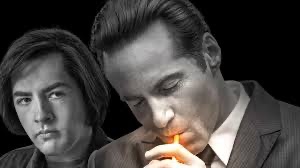
For starters, it’s important to note that Many Saints is not a coming of age story about Tony Soprano. In fact Michael Gandolfini ,who portrays young Tony, doesn’t make his first appearance until well into the film’s second act. And that’s a crying shame because Gandolfini, who as everyone knows by now is the son of the late actor who originated the role, is pretty darn good. By nature or nurture, Gandolfini capably delivers the goods. From Soprano’s brooding undertones to his often overlooked astuteness, the 22 year old actor nails the younger version of the character that his father so expertly portrayed. Had the story followed the young Tony Soprano a bit closer, perhaps more fully narrating the yin and yang of the relationship he had with his paranoid, sharp tongued and depressive mother we might be talking about a far more insightful film. We might also be talking about how Vera Famiga was able to fully inhabit the role of Livia Soprano instead of simply impersonating the character made famous by Nancy Marchand.
Instead what we get is a film that tries too hard to tell too many stories in two hours. For the most part, its a glimpse into a very specific portion of the life of Richard “Dickie” Moltisanti, the legendary character that’s referred to but never seen during the show’s eight year run. The clever adoption of the film’s title to the literal translation of Moltisanti is a nice touch but thats where the cleverness stops. Alessandro Nivola, who plays Dickie presents as a more than capable actor but whether because of limited time or a specific talent gap for the part he simply doesn’t fill out the role. His lack of energy and presence makes it hard to believe that this is the guy who is responsible for Tony Soprano. And while Nivola’s character is responsible for a good portion of the film’s violence, the prototypical disregard for human life sequences seem overly predictable, gratuitous and formulaic as in “insert violence here.” His best scenes are when he plays opposite Ray Liotta, who in fact pulls double duty as two characters and hits home runs in both roles. There is no better example of how good Liotta is then when he’s portraying the remorseful Uncle Sally and delivers the line, “Pain comes from always wanting things.”
As for the famous supporting cast of crew members, Paulie “Walnuts” Gualtieri, Salvatore “Big Pussy” Bonpensiero and Silvio “Sil” Dante they collectively represent one of the more egregious sins of the whole production. Limited to one note each, the actors who portray them are relegated to continually repeating the same affect over and over again. This is particularly painful in the case of John Magaro who plays Silvio Dante. His channeling of Steven Van Zandt, the actor who so skillfully and artfully originated the role, reduces Silvio to something straight out of a comic strip. Someone should have tapped Magaro on the shoulder and whispered in his ear, “It was funny the first time.” And what’s up with John Bernthal, the talented actor who brought us Shane Walsh from the Walking Dead? This is the second time he seems to be the victim of a casting director’s bad day. Whether its Lee Iacocca or Johnny Boy Soprano, he just doesn’t seem to do Italian. As Corrado “Junior” Soprano, Cory Stoll delivers the film’s only interesting twist. While he lacks the richness and natural style of Dominic Chianese he does try hard and Stoll probably would have won our hearts had we been playing horseshoes.
So far we’ve discussed the formation of Tony Soprano and the tortured life of Dickie Moltisanti. But there’s a third element to this film and that’s the social commentary. Newark in the late 1960’s was a caldron of conflict and prejudice. Tucked within the shadows of New York City it was a time bomb waiting to go off. To his credit, David Chase takes this on. But much like the mobsters of Many Saints who watch Newark burn from the distance of their exburb nightclub we never really get close enough to understand. The multitalented Leslie Odom Jr who plays Harold McBrayer and the few other characters who travel in his orbit, need their own story. Interestingly enough, the brief epilogue, sandwiched in between the end title and the closing credits may just be a sign of things to come in that respect.
I’m an equal opportunity reviewer so I give fair time to the cinematography and the music. As far as the viewing experience goes – how much longer are we going to have to endure overly excessive CGI of panoramic backgrounds? I’m prepared to suspend reality when watching something out of Marvel Studios or other action/fantasy genres. But lately, particularly when I view a drama, I find myself becoming the guy in Diner who while searching for a black and white Emerson TV laments – “I don’t like color television, don’t like color for nothing. I saw Bonanza over my in-laws and it was not for me. The Ponderosa looked faked.” And 24 hours after seeing Many Saints I can’t remember a single song or musical tune which wasn’t the case when I was watching the Sopranos on HBO. I’m not sure whether to attribute that to a film score that lands flat or the fact that my short term memory isn’t what it was in 2004.
Prior to the October 1st premiere David Chase gave a number of interviews. On one particular late night show he made two points that are hard to reconcile. First he said you don’t have to see the show to watch The Many Saints of Newark. In as much as you don’t need to enter a secret “Sopranos Fan Passcode” before viewing, that’s technically true. But beyond the brief story arch of Dickie Moltisanti, that’s a tall order. From the striking familial resemblance of young Gandolfini’s performance to the inside jokes of the supporting characters, you may very well be saying to yourself – I don’t get it. But it was the second point that Chase made that’s stuck in my craw. He said to really appreciate the film, you should see it in a movie theater. Beyond a blatant attempt to encourage people to return to the cinema in a “post pandemic” world, the statement seemed out of line with the essence of The Sopranos. That’s because every Sunday night, Tony Soprano and his family came directly to you, magically delivered to your cable box. Over the course of the show’s run, characters grew, cultural references were coined, drama was delivered and humor was expertly inserted. Each week David Chase conducted a master class in character motivation and behavior, delving deeply into the Sopranos principal characters no matter how dark the path. And all that time, unfolding it on a screen a fraction of the size you’d find at your local multiplex – no popcorn required.
Sadly, in the final analysis, that’s the principal flaw in The Many Saints of Newark. Dickie Moltisanti and young Tony didn’t need more, they needed better.
 Writing Act Three
Love this Bob! Agree totally with your sentiment. Will certainly read your other posts…who knew?
LikeLiked by 1 person