Month: January 2017
Silence – The Intersection of Faith and Suffering as Seen by Martin Scorsese

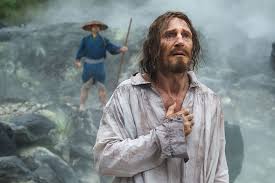
For a quarter of a century, Martin Scorsese has been working on a project about 2 Jesuit priests in 17th century Japan, which he says is his own passion of faith. But, after two and 3 quarter hours, even if you are sitting in one of those cushy multiplex recliners, you might just feel like you’ve been there for at least a few of those 25 years.
But hang on, Silence is not a bad movie – it’s a thoughtful film with a clear and profound narrative. Inspired by the 1966 novel with the same title, Japan in 1640 sees Christianity as a challenge to its core beliefs and leadership. Inquisitors are dispatched to cruelly force Christians and in particular the missionary priests who lead them, to renounce their faith. It’s a riveting story that raises serious questions about culture and beliefs – but admittedly it’s long and at times repetitive.
Missionary work in a closed society such as Japan in the day and age depicted must have been incredibly hard, frustrating and filled with danger. Even a casual observer of Silence who gets up for a popcorn refill would soon understand that without the lengthy narrative and the multiple examples of increasingly cruel torture.
Sadly, it’s not the only flaw in the movie – Andrew Garfield’s performance in the lead role as Father Sebastião Rodrigues falls short. Garfield cannot summon the gravitas that cast members Adam Driver and Liam Neeson bring to their roles as fellow Jesuits who embark on this life-threatening mission. Perhaps this is because visually there’s no escaping his schoolboy looks or maybe I was just waiting for Spider-Man to appear. Either way, it seems to be a simple case of mis-casting in what is otherwise a technically good performance.
All that said there’s plenty to like about the film. It’s shot in a breathtaking fashion with thoughtfully chosen locations in Taiwan and Taipei. The cinematography successfully recreates what one would imagine Nagasaki and its surrounding villages looked like in 1640. Rodrigo Prieto has worked with Scorsese before as well as other A list directors and it shows. There is a visual symmetry to the story that works very well and immediately transports you emotionally and viscerally to the time and place.
It’s also uniquely scored in a way that emulates the inherent natural beauty of the land while balancing it with the cruelty of the Nagasaki prisons where Garfield and his fellow Christians are held. In a head scratching twist, the husband and wife team of Kim and Kathryn Kluge, who wrote the music for the film, were disqualified from Oscar consideration because the score was not “musical” enough – which raises the question…. says who?
Liam Neeson, in a small but powerful role, plays Fr Cristóvão Ferreira the real life Jesuit missionary who renounces Christianity after years of being a role model of faith and courage to his fellow Jesuits. As others have previously noted, it’s refreshing to see Neeson in a role that allows him to exercise yet another set of “particular skills” beyond neck breaking action hero. His portrayal of the former Jesuit whose faith appears to be broken beyond repair is captivating and his stunning delivery of one of the story’s core concepts; the inexorability of belief, culture and environment is one of the high points of Silence. And while none of us have personal knowledge of 17th century Jesuits, Adam Driver’s portrayal of Fr Francisco Garrpe has a realism to it that seems to fit the story.
When all is said and done, Silence asks some serious questions albeit Scorsese may have been better served getting to them sooner. Some will walk away convinced that the central message is a cautionary tale about the lack of universality in religion and that missionary work, in some cases is futile. What is the value of attempting to impose a belief set on another in an inhospitable environment where it cannot flourish and grow? But that’s not the only message Scorsese is advancing and he makes that quite clear by using various methods – some overtly traditional and others somewhat subtler.
And for those that believe it, as it appears Scorsese does, the final message is both simple and profound – I carry your pain…always, I forgive you…always and in the silence of what may appear to be abandonment – I stand beside you…always.
Fences: A Lifetime of Boundaries, Real and Imagined

In August Wilson’s award winning play Fences, the central character, Troy Maxson, is a bitter man who always seems ready to fight off the next demon in his life. The product of a day and age that wholesaled bias and discrimination, Troy is so damaged by his situation that he’s incapable of celebrating the good fortune of others, even when they share his family name or skin color. In many ways he’s isolated himself from a world that’s changing but sadly, not soon enough for him. Indeed, beyond his job as a trash collector, building an actual backyard fence is a key element of the weeks, months and eventually years that pass in the story. Perhaps an allegory for the protective boundaries he’s created – imaginary lines that he dares himself and the people around him to cross.
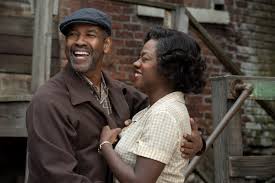
Produced for the stage 3 times, Fences has now been brought to the screen by Denzel Washington who not only delivers a stunning performance but also assumes directorial duties. Washington, along with the equally talented Viola Davis who plays Rose, the dutiful wife and mother and a strong supporting cast effectively elevate the work to a level befitting its standing as a stage classic. A once talented athlete, trapped in baseball’s Negro Leagues in a pre Jackie Robinson era, the Loman-esque character of Troy Maxson now lives in a world of could’ve and should’ve memories that slowly but surely detaches him from those around him.
Waxing on of glory days, Denzel Washington, as you would expect an actor of this caliber, has the ability to transport both Troy and the audience to a time before all of the trash collector’s hopes and dreams were dashed away. Having played him on Broadway, Washington knows this character well and he reprises the role masterfully. He expertly throttles Troy’s emotions knowing just how and when to turn joviality into all out rage. Ye, as good as he is, it’s Viola Davis’ Rose that steals the show.
Rose is the one true injured party in the story and there are many opportunities for an actor to overplay the role. But Davis never does, she keeps a calm reserve allowing only her eyes and the occasional change in tenor to reveal hopefulness in an otherwise disappointing life. The performance, understated at first, builds throughout the film and reaches tour de force as Troy slowly but surely finds the courage to reveal an indiscretion he’s been concealing. Davis’ entire performance is Oscar worthy, but the highlight clip will most likely be her emotional retort “I’ve been standing right next to you!” as Washington’s character laments “I’ve been on first base all my life!”
There isn’t a subpar performance in the entire cast as Russell Hornsby and Jovan Adepo play Troy’s sons and both prove they are up to the task of sharing the screen with Washington. Stephen Henderson no stranger to the stage and an August Wilson regular, plays Troy’s friend Mr. Bono with what seems like practiced ease. Mykelti Williamson, in the role of the cognitively challenged brother is pitch perfect conveying the innocence and purity of someone who looks up to and admires his brother no matter how flawed he may be.
Moviegoers are forewarned though – Washington’s adaptation of Fences is not cinematic. Beyond a brief exception or two it limits itself, which one must assume is intentional, to the boundaries that would otherwise be part of a stage production. And while this ensures an accurate reflection of the original work, it also means that a lot of drama is delivered non-stop from the confines of the family’s Pittsburgh row home backyard. This, without the benefit of the 15-minute intermission that would be afforded to playgoers can become a bit overbearing and might produce a mild degree of literary indigestion.
It’s certainly not the first time this has been done when adapting a play to the screen but admittedly there’s lots of content and emotion packed into this show. Perhaps it’s Washington’s way of truly emulating his character, building another imaginary boundary, this time for the audience, who at times may feel just as trapped as the Maxson family and at other times just a sympathic neighbor on the outside looking in. Whatever the reason, its worth the price for what should be considered an all around master class in acting.
La La Land – They Make Movies Like This…Again

In the not too distant future, on an episode of Jeopardy, under the category “Ground Breaking Cinema” don’t be surprised if this appears – The 2016 film that re-established a genre lost somewhere in the 1960s. And the response – in the form of a question of course – will be…What is La La Land?
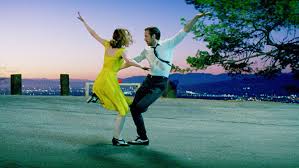
If you’re reading this and still asking yourself that question then get, as soon as possible, to the nearest movie theater to experience Damien Chazelle’s masterpiece starring Ryan Gosling and Emma Stone. The 31 year old Chazelle of Whiplash fame has once again teamed up with his Harvard roommate, composer Justin Hurwitz, to deliver a movie musical that is both soaringly beautiful and intimately personal. And while there’s nothing new about a boy meets girl movie musical – La La Land is new and fresh everywhere else.
From the truly inventive opening number shot on a freeway overpass (a real one mind you with cars buzzing underneath) to the poignant epilogue that seamlessly portrays an alternate ending of coulda’ shoulda’ and woulda’s this is a fresh take on a cherished genre. And as each scene and song advances, Chazelle demonstrates that La La Land is every bit as good as movie musicals of the past and more importantly- how much better they can be in the future.
He starts with two very likable actors in Emma Stone and Ryan Gosling and as you’re trying to figure which famous couple they’re emulating it hits you that these two aren’t channeling anyone, they’re playing it themselves and it’s grand. Stone and Gosling’s on screen chemistry is so perfect that no one in the audience seems to notice that their collective singing and dancing would best be described as adequate. Neither one of these folks is a Broadway belter yet remarkably that seems to work to the advantage of both actors.
Reaching for that difficult note and dancing by the numbers makes their characters even more likable, realistic and endearing as they both struggle to survive in a town that’s all business and an industry that appears to have little room for heart. The singing and dancing – which dare I say are at times endearingly ordinary nevertheless – bring a practical accessibility to the story that in the past could only be admired from afar, when the likes of Astaire and Rogers graced the screen. Even when they simply gaze at each other there is that dreamy longing in their eyes and it’s downright romantic. Anyone who’s ever been in love or dreams of being in love is watching this couple vicariously as they head full steam into a classic Hollywood ending…right? Well maybe – that will depend on your personal definition of happiness. Sure there’s a story going on here and life inevitably gets in the way.
Sebastian is a struggling musician who dreams of his own jazz club – he’s a purest who abhors the superficiality of LA –“they worship everything but value nothing.” There’s no denying Gosling as Sebastian is a dreamboat of the first order. But there’s more, he possesses a range that goes far beyond his looks, summoning the moody edges of Brando in one instance and the smoothness of Astaire the next.
And Emma Stone is simply heartwarming in her portrayal of Mia, the aspiring actress who dreams of winning that one role but settles for a job as a barista on the Warner lot to make ends meet. When summarily dismissed after one line of a reading she pleads “I can do it another way!” You can’t help empathizing with her, eyes full of hope and dreams, a clean scrubbed personality, she’s the girl you bring home to meet mom.
And in a second act treat – real life singer John Legend plays Keith, Sebastian’s old high school friend who’s now the front man for a commercially successful group. He makes Sebastian a generous offer to join the band but Gosling’s character balks because he thinks he’s selling out. Legend delivers a convincingly pragmatic lecture on the realities of the entertainment industry that’s more genuine than anything you might have seen see in a 1950’s or 1960’s movie and his musical number “ Start a Fire” is an added bonus to an already top notch score.
Filmed in and around Los Angeles, the city that coined the same name, La La Land is as much a visual treat as it is a musical one. Chazelle and his team take full advantage of Los Angeles with all its life and moods. The clever capture of light is such that in a way it assumes a supporting role. The music, which is center stage throughout the film elevates the entire work to a modern day classic. The central theme song and the equally emotional City of Stars are hauntingly beautiful and like many well crafted tunes from past musicals, I’m betting you’ll have trouble getting them out of your head.
The film, while shot in present day contains a number of scenes that harken back to a bygone era when it seemed so natural for everyone in a movie to stop what they were doing and burst into song. That era, lost somewhere between Julie Andrews’ melodic performance in the Sound of Music and Pierce Brosnan’s croaking in Mama Mia has been reinvigorated by Damien Chazelle. Balancing the best of the old with a modern story line, songs that capture today’s sound with a clever nod to the past and just the right amount of CGI – La La Land hits all the right notes.
So call someone, set a date, get a big bucket of popcorn and dive right into La La Land. Don’t wait for this one to show up on demand, you’ll need a theater with a really big screen and loads of people around you who just might start clapping. Yes indeed, they’re making movies like this again and its magical.